
Why Does My Hot Water Smell Like Rotten Eggs? The Tank Clue
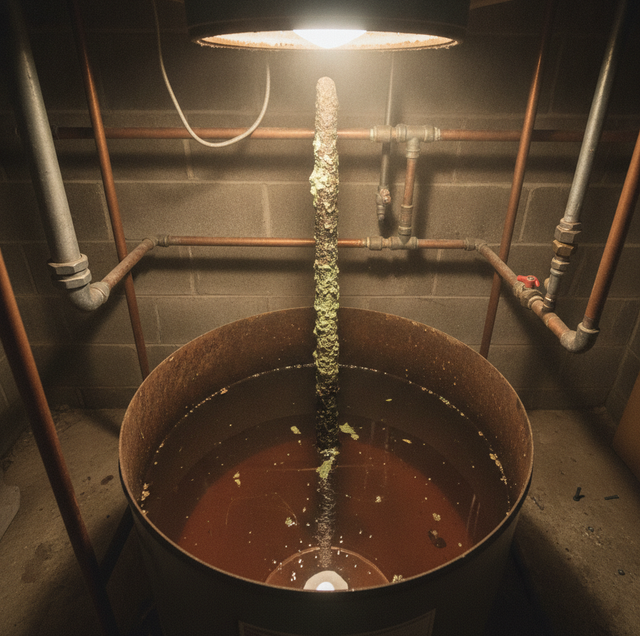
You turn on the hot tap, and a few seconds later, the bathroom smells like a cracked egg or a struck match. The cold side is fine. Run the hot water for a minute, and the odor fades; then it comes right back the next morning. It is unpleasant, it is embarrassing when guests notice it, and it is trying to tell you something specific about your plumbing.
Quick Answer: That rotten-egg smell is hydrogen sulfide gas. When it appears only in the hot water, the source is almost always the water heater, where bacteria in the tank react with the anode rod and produce the gas. The lasting fix is to disinfect the tank and change what is feeding the reaction, not to mask the smell.
What the Smell Actually Is
The odor is hydrogen sulfide, a gas that, even in tiny amounts, smells to the human nose like rotten eggs or sewer. People can smell it at concentrations far below what a meter would register, which is why a trace in your shower water is enough to clear a room, even though the actual amount of gas is very small.
Hydrogen sulfide in home water does not usually arrive through the pipes from the street. It is produced right where you smell it, by living organisms. That single fact is what makes the pattern of the smell so useful for tracking down the cause, because gas made inside the water heater behaves differently from gas riding in on the incoming supply.
The Real Cause: Bacteria Meeting the Anode Rod
Inside a tank water heater, there is a metal rod called a sacrificial anode, usually made of magnesium or aluminum, whose job is to corrode in place of the steel tank so the tank does not rust through. It is a good and necessary part. The trouble starts when a particular kind of microbe gets involved.
These are sulfate-reducing bacteria, harmless organisms that live in many water supplies and feed on sulfate, a mineral dissolved in the water. They cannot tolerate much oxygen, so the still, warm, low-oxygen water at the bottom of a heater is close to ideal for them. As they process sulfate, they pull electrons from the corroding magnesium anode, and the byproduct of that whole exchange is hydrogen sulfide gas. So the recipe is three things at once: a standard reactive anode giving up electrons, warm water the bacteria love, and water chemistry that carries the sulfate they eat. Put those together, and the tank quietly manufactures the smell.
Think of the anode rod as a battery terminal sitting in a warm broth of bacteria. The rod supplies the electrical push, the bacteria supply the appetite, and the gas is what bubbles off the reaction. Take away any one leg of that, and the smell has nothing to run on.
The One Clue That Points to the Answer
Before anyone touches a wrench, pay attention to where the smell shows up. It is the fastest diagnostic you have, and it usually decides the whole approach.
If the smell is in the hot water only, and the cold runs clean, the water heater is the source. The gas is being made inside the tank, so it only rides out on the hot side.
If both the hot and the cold water smell, the heater is not the problem. Something in the incoming supply is carrying the sulfide before it ever reaches the tank, which points to the water source itself, a well, or the plumbing ahead of the heater.
There is a third pattern worth ruling out. If the water in a glass has no smell once you carry it to another room, but the sink or shower reeks while it drains, the odor is coming from the drain, not the water. Bacteria and debris in a P-trap or overflow can throw a very similar sulfur smell, and the giveaway is that it clings to the fixture rather than the water. Sorting the water heater from the source from the drain is the single most valuable step in this whole process, because each one has a completely different fix.
What Actually Fixes a Smelly Water Heater
Once the hot-only pattern has pointed at the tank, there are a few moves that address the cause rather than covering it up. They work best in combination, and a licensed plumber can carry them out safely on a gas or electric unit.
Flush and disinfect the tank- A one-time shock treatment clears the current bacterial population. This typically means draining and flushing the tank, then circulating a chlorine or hydrogen-peroxide solution through it and the hot lines, letting it dwell, and flushing again. It knocks the smell out immediately. On its own, though, it is a reset, not a cure, because the conditions that grew the bacteria are still present.
Change the anode rod- This is the step that usually makes the fix stick. Swapping the standard magnesium anode for an aluminum-zinc rod removes the aggressive electron source that the bacteria were exploiting, and the zinc content specifically interferes with the reaction. For a stubborn case, a powered anode, also called an impressed-current anode, protects the tank using a small electrical current instead of a dissolving metal rod, so there is no sacrificial metal for the bacteria to react with at all.
Treat the water- When the underlying water chemistry keeps feeding the problem, the durable answer is upstream: correcting the water so the sulfate and bacteria load coming into the house is lower. This matters most for homes on a well or with heavy mineral content.
One thing not to do is chase the smell by cranking the thermostat up to a scalding setting and leaving it there. Very hot water does suppress bacteria, but water heaters left at dangerous temperatures can scald in seconds, and that is not a safe way to run a home. Temperature work, such as a controlled high-heat sanitizing cycle, belongs to a professional who can do it correctly and return the heater to a safe setting.
The Tempting Mistake: Pulling the Anode Rod
Because the anode rod is part of the chemistry, some people reason that removing it entirely will eliminate the smell. It often does end the smell. It also starts a countdown to a ruined tank.
The anode is the only thing protecting the steel tank from rusting through. With no rod in place, the corrosion that has been quietly eating away at the sacrificial metal attacks the tank walls directly, and the heater can begin to rust from the inside and fail years early. Pulling the anode also voids the manufacturer's warranty on most units, so a leak that follows is entirely on you. The correct move is never to remove the anode, but to replace it with a different type that does the same protective job without feeding the bacteria.
When the Smell Is Not the Water Heater At All
If both hot and cold water smell, look to the source. Homes on a private well are the classic case, since well water often carries the sulfate and the bacteria naturally, and no amount of work on the heater will touch a smell that is arriving through the main. Whole-house treatment is the path there.
A water softener can quietly make matters worse, even on city water. Softeners create low-oxygen, salty conditions that some sulfate-reducing bacteria find agreeable, and the softened water tends to speed up anode reactions, so a softened home sometimes gets the rotten-egg smell it never had before. On those homes, the fix is usually paired: the aluminum-zinc anode to slow the reaction and periodic disinfection to keep the bacteria count down. Matching the fix to the real source, rather than assuming every sulfur smell is the tank, is what keeps it from coming back a month later.
Frequently Asked Questions
You can confirm the tank is the source with a quick side-by-side test: run a cold tap and a hot tap at the same time and smell each. If only the hot one reeks of sulfur, the heater is making the gas. When the odor is present on both taps, the source is upstream in the incoming supply. A water softener that feeds only certain taps can narrow it further still, since the fixtures on softened lines will smell while any that bypass the softener stay clean, pointing you to where the reaction is really taking hold.
The rod supplies the electrons that let the bacteria produce hydrogen sulfide, so its condition drives how strong the smell gets. Plan to check it every few years by pulling it and looking at how much metal is left. A rod is spent once it has worn down to the bare steel core support wire running through it, and at that point, the tank has lost its protection, and the smell reaction can actually get worse rather than better. Catching a worn rod early lets you switch to an aluminum-zinc type before both problems set in.
The hydrogen sulfide levels a home water heater produces are usually a nuisance rather than a health hazard, since the nose detects the gas at concentrations well below harmful ones. It should not be ignored, though, because it is a live sign that bacteria are established in the system. A strong or worsening sulfur smell is worth having the water tested to confirm what is actually present.
No. Pulling the rod trades a smell for a tank that corrodes and fails early, and on most units, it voids the warranty. It also leaves an open port on top of the tank where the rod is threaded in, often hidden under a plastic cap or built into the hot-outlet nipple. Some heaters use a combination anode built right into that nipple, and rather than removing it, a plumber swaps it for an aluminum-zinc type that keeps protecting the tank without feeding the bacteria.
A chlorine or peroxide shock kills the existing bacteria and clears the smell right away, making it feel like a complete fix. It is really a reset, though. If a magnesium anode or the water chemistry is still feeding the reaction, the bacteria repopulate, and the odor returns in weeks. Disinfection gives you a clean slate; the anode swap or water treatment is what keeps the slate clean.
It can, and the most durable fixes sit upstream of the heater. Adjusting the softener's salt dose so it is not oversalting the water, or adding a separate iron or sulfur filter ahead of the heater, cuts down what actually feeds the bacteria in the first place. That upstream approach lasts far longer than only treating the tank, because it stops resupplying the reaction rather than clearing a batch of bacteria that will simply grow back.
Book a water heater diagnosis today — end the sulfur smell at its source with a lasting fix. Flow Tech Plumbing serves Peoria and the Valley. ROC #347159. Call (623) 267-2703.
