
What Causes a Sewage Smell in the Bathroom? The Seal That’s Failing
You walk into the bathroom, and the air smells like a swamp, or worse. It's not the toilet after use; it's just sitting there, a low, rotten smell that hangs around the tile and the drain no matter how much you scrub or spray. Nothing looks wrong. The toilet flushes fine, the sink drains fine, and yet the smell keeps coming back a few hours after you've aired the room out. That pattern is the biggest clue of all: when a bathroom smells like sewage, but nothing looks broken, the problem is rarely dirt. It's a seal that's supposed to be there and isn't doing its job anymore.
The Water Seal Standing Between You And The Sewer Line
Every drain in your bathroom- the sink, the tub, the shower, the toilet- connects to the same network of pipes that eventually ties into the sewer main. That network carries waste gas as well as waste water: methane, hydrogen sulfide, and other compounds that smell exactly like what they are. Nothing keeps that gas out of your bathroom except one thing: a small curved section of pipe under most fixtures called a P-trap.
A P-trap is shaped like the letter P laid on its side, and that curve is the whole point. After water drains through it, a slug stays trapped in the dip, plugging the pipe the way your thumb plugs a straw when you press it over the top and lift the straw from a glass. As long as water sits in that curve, sewer gas has no path up into your bathroom. Drain the water out, for any reason, and the seal is gone, even though the pipe itself is perfectly intact.
That single mechanism explains most sewage odors that appear with no visible damage. The pipes aren't leaking gas through a crack; they're leaking gas through an empty trap that used to be full.
A Drain That Hasn't Been Used In A While Runs Dry
The most common way a trap loses its water has nothing to do with a clog or a break. It simply evaporates. A guest bathroom used only a few times a month, a floor drain in a laundry closet, or a decorative tub in a house with a second shower can all sit long enough between uses that the water in the trap slowly dries up, especially in a room that runs warm or gets direct sun through a window.
Floor drains are the classic offender because they're easy to forget entirely. One near a water heater or in a bathroom closet might go months without a drop of water passing through it, and once its trap dries out, it becomes an open pipe straight down into the sewer system, a few feet from where you brush your teeth. The fix is almost embarrassingly simple: pour a pitcher of water down the drain, and the smell should stop within minutes, because the seal is restored. If it comes right back within a day or two, something is actively pulling that water out faster than it should, pointing to one of the causes further down this list rather than simple neglect.
A Toilet Base Is A More Common Culprit Than People Guess
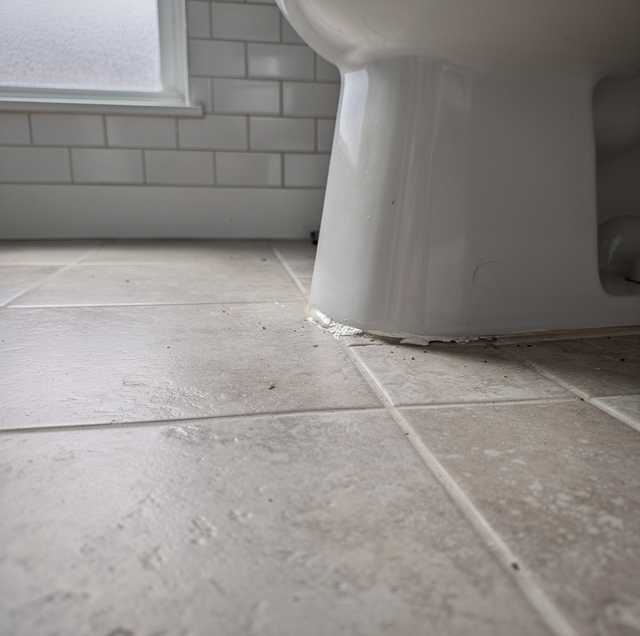
A toilet doesn't rely on a P-trap the same way a sink does, but it has its own version of the same idea: a wax or foam ring seated between the base of the toilet and the drain flange in the floor. That ring does two jobs at once. It seals the connection so water and waste pass straight down into the pipe, and it blocks sewer gas from working its way up around the base of the bowl.
That ring can fail in a few ways. A toilet that rocks slightly when you sit down, even a small wobble, slowly works the wax seal loose the same way rocking a bolt back and forth eventually loosens a nut. A cracked or corroded flange, the ring in the floor the toilet bolts to, can sit at the wrong height and never let the wax compress properly in the first place. Old wax rings also just age out over ten to fifteen years and lose their ability to hold a seal even without any rocking at all. When that seal breaks, gas doesn't come up through the bowl, so flushing looks and sounds completely normal. It seeps out around the base instead, pooling worse near the floor, which is why a smell that's stronger down low usually means the base seal rather than the trap.
One Blocked Vent Can Empty Every Trap In The House
Every drain trap in your home only works because of a partner system you never see: the vent stack, a pipe that runs up through the roof and lets outside air into the plumbing as water drains. Without that air, draining water pulls a vacuum behind it, and that vacuum can pull the water straight out of nearby traps as it passes, siphoning the seal dry in the process.
A vent blocked by a bird's nest, fallen leaves, or debris at the roof opening stops doing its job, and every trap tied to that run becomes vulnerable to siphoning. You'll often hear it before you smell it: a gurgle from the sink or tub when the toilet flushes is air fighting its way through a fixture's trap because it can't get in through the vent. If that gurgling shows up alongside the smell, check the roof stack for a blockage rather than only chasing the fixture.
Small Gaps And Worn Seals Around The Fixtures Add Up Too
Beyond the trap itself, a bathroom has a handful of smaller gaskets that can allow gas to leak as they age. A tub's overflow drain, the covered opening near the top that prevents flooding, has its own gasket and a short pipe run down to the main line; a dried-out or cracked gasket there is an easy, overlooked leak point precisely because the overflow cover rarely gets removed or inspected. Around a shower drain, the rubber gasket sealing the drain body to the pipe below it can shrink or crack over years of hot-cold cycling, letting a thin trickle of gas rise around the strainer. None of these leaks are dramatic, but a low-level smell that never fully clears with cleaning is consistent with exactly this kind of worn seal.
When The Smell Points Past The Bathroom Itself
Most sewage smells trace to one of the seals above because they're the weakest links in an otherwise sealed system. Occasionally the cause sits farther out, in the branch or main line that carries waste away from the house. A cracked pipe near the bathroom, root intrusion in an older line, or a section of pipe that's settled into a low spot can let gas work its way back toward the house instead of moving out with wastewater.
The way to tell the difference is scope. A dry trap or a failed toilet seal produces a smell centered on a single fixture or room. A smell that shows up in more than one bathroom at once, paired with slow drains or gurgling across multiple fixtures, points further down the line rather than at any single seal, and that's a job for a camera inspection rather than a trap refill.
Tracking Down Which Fixture Is Actually Leaking
Before calling anyone, a few minutes of testing usually narrows the source. Pour a full pitcher of water down every drain you don't use daily, including the tub, the shower, and any floor drain, then wait a day and see if the smell returns. If it doesn't, you've found and fixed a dry trap. If it comes back fast, something is draining that trap again, most likely a siphoning vent.
Next, check the toilet base by hand, gently rocking it side to side while someone watches for movement at the floor. Any wobble at all is worth taking seriously, since it's the clearest sign of a failing wax seal even before the smell gets bad. Listen, too, for gurgling whenever a toilet flushes elsewhere in the house; that sound is the vent system telling you it's under strain. A sheet of plastic wrap pressed over a suspect drain for a few hours, then lifted to smell directly at the opening, can confirm whether gas is coming from that specific fixture rather than drifting in from elsewhere in the room.
What Actually Stops The Smell
Once you know which mechanism is failing, the fix usually matches it directly. A dry trap just needs water, though a floor drain or rarely used tub is worth refilling on a set schedule; monthly is a reasonable habit, so it doesn't dry out again. A failing wax seal needs the toilet pulled, the old ring and wax residue cleaned off the flange, and a new seal set with the toilet bolted down snug and level; a cracked or too-low flange should get corrected at the same time, or the new seal fails the same way the old one did. A blocked vent requires clearing the obstruction from the roof opening, sometimes by running a cable down the stack. Worn gaskets around an overflow or a shower drain get replaced outright rather than patched, since a dried rubber seal won't reliably reseat once disturbed.
When the testing above points past the bathroom, toward multiple fixtures acting up together or a smell that persists no matter what gets refilled or resealed, a camera run through the branch and main lines confirms the cause rather than guessing. Diagnosing a cracked line or a failing vent stack from the roof isn't something most homeowners are set up to do safely.
Frequently Asked Questions
In the small amounts that typically leak from a dry trap or a worn seal, sewer gas is mostly a nuisance rather than an immediate health threat, since your nose detects hydrogen sulfide at concentrations far below what's harmful. The bigger risk shows up in an enclosed, poorly ventilated space where gas can build up rather than dissipate, since methane is flammable and higher concentrations of hydrogen sulfide can cause headaches or nausea. A window cracked open while you sort out the source is a reasonable precaution either way.
Traps and vents lose a little of their protection overnight because nothing runs through them for six or eight hours straight, giving a slow leak or dry trap more time to build up gas in a still room. Running the shower or flushing first thing often clears it temporarily, masking a problem that would otherwise be caught earlier.
Yes. A newly installed sink, tub, or toilet occasionally gets set with a trap plumbed at the wrong height or distance from the drain, which keeps it from holding water no matter how often it's filled. That's a plumbing correction, not a seal replacement, since the pipe layout itself is the problem.
An exhaust fan can pull air out of the room faster than it's replaced, and in a tightly sealed bathroom, that pressure drop can, in rare cases, cause a marginal seal to draw slightly more gas. If the smell noticeably intensifies the moment the fan kicks on, mention that detail to whoever inspects the drains, since it suggests the seal is only barely holding.
A trap primer, a small device that periodically adds a trickle of water to a floor drain, prevents evaporation in fixtures that don't get regular use, making it a legitimate long-term fix for that one cause. A deodorizer or drain-cleaning tablet does nothing for a broken seal; it just masks the smell while the gap stays open.
Most wax rings hold up for roughly ten to fifteen years, though a toilet that's been reset even once, for flooring work or a repair, gets a fresh seal each time and restarts that clock. A toilet that's never been removed since installation and is well past that age range is worth checking proactively, since the ring degrades gradually rather than failing all at once.
Schedule a bathroom plumbing inspection — get a clear answer on which trap, seal, or vent is letting sewer gas into your bathroom. Flow Tech Plumbing serves Peoria and the Valley. ROC #347159. Call (623) 267-2703.
