
How Often Should I Flush My Water Heater?
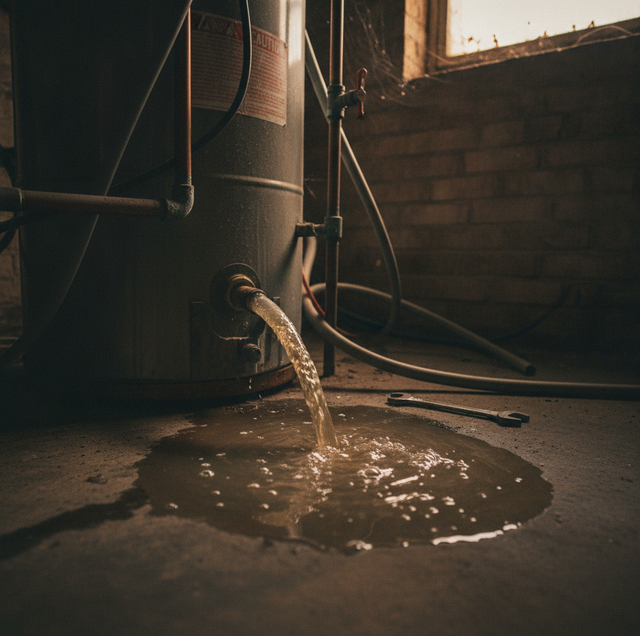
Your water heater has started making a low rumbling or popping sound, the hot water doesn't seem to last as long, and you have a nagging sense that it's working harder than it used to. Those are the classic signs of sediment building up at the bottom of the tank, and flushing is the maintenance step that clears it out. The question most people never get a straight answer to is how often it actually needs doing.
The honest answer is that it depends on your water, and if you live with hard water, the standard advice is not enough.
What Flushing Actually Does
A tank water heater fills with the same water that comes out of your taps, and that water carries dissolved minerals. Over time, those minerals, mostly calcium and magnesium, settle out and collect as sediment on the bottom of the tank, right above the burner or the lower heating element. Flushing drains the tank and rinses that sediment out before it hardens into a thick, insulating layer. Skip it long enough, and the sediment bakes onto the bottom, making the heater work harder, wasting energy, and shortening the tank's life. The rumbling you hear is water bubbling up through that layer.
The General Rule, and Why It's Not Enough Here
For most water heaters, the standard advice is to flush the tank at least once a year, and sticking to it is one of the simplest ways to protect the unit. That cadence keeps sediment from accumulating faster than the heater can tolerate in average water conditions. It is a fine baseline, and if you did nothing but flush annually, you would be ahead of most homeowners.
The catch is that the once-a-year rule assumes average water. With hard water, sediment accumulates much faster, so the interval needs to be shorter. In hard-water areas, the common guidance moves to every six months, and in a region with especially hard water, roughly every six months, or twice a year, is the sensible target for a tank without any treatment. The harder your water, the more often the tank needs clearing, simply because it fills with more minerals to drop out.
| Water condition | Suggested flush interval |
|---|---|
| Average / softened water | About once a year |
| Hard water | About every six months |
| Very hard water, no softener | Roughly twice a year, or more |
| Tankless unit in hard water | Descale on the manufacturer's hard-water schedule |
Why Hard Water Changes the Math
In an area with some of the hardest water around, commonly in the range of a dozen to twenty grains per gallon or more, the mineral load is simply higher, so the tank fills with more calcium and magnesium, which become sediment and scale. That is why heaters here scale up on an accelerated clock and benefit from twice-a-year attention rather than annual. It is also why a whole-home water softener pays off on the water heater specifically: by removing much of the minerals before they reach the tank, a softener slows sediment buildup dramatically, and a heater on softened water can go back to the longer, once-a-year interval. Tankless units are even more sensitive, since their narrow heat exchangers scale quickly and need descaling on the manufacturer's hard-water schedule to survive.
What a Proper Flush Involves
A flush is simple in principle but worth doing right. The heater is shut down first, the gas set to pilot, or the electric breaker switched off, so nothing heats a draining tank. The cold supply is closed, a hose is run from the drain valve to a safe drain or outside, and the tank is drained. Opening a hot tap relieves the vacuum so it empties cleanly. Then the cold supply is briefly turned back on to stir and rinse the loosened sediment out until the water runs clear, the valve is closed, the tank refills, and the heater is restarted. The whole point is to remove the settled mineral from the tank before it hardens to the bottom.
Frequently Asked Questions
The clearest signs are a rumbling or popping sound from the tank, hot water that runs out faster than it used to, longer heating times, and higher energy bills for the same use. All those points to sediment on the bottom of the tank. If you have never flushed the heater and you have hard water, it is almost certainly due.
Sediment keeps collecting and eventually bakes into a hard, insulating layer on the bottom of the tank. That layer forces the heater to work harder and longer for the same hot water, wastes energy, causes the rumbling noise, and shortens the tank's life. In the long run, neglecting it often means a heater that fails years earlier than it should.
Many homeowners can, by shutting off power or gas, connecting a hose to the drain valve, and draining and rinsing the tank. Even so, if the valve is old, the sediment is heavy, or you are not comfortable with the shut-off steps, it is worth having a professional do it, because a stuck valve or a botched restart can cause problems. Done regularly, it is routine maintenance either way.
A softener greatly reduces the minerals reaching the tank, so sediment builds up much more slowly, and you can move back toward a once-a-year flush rather than twice. It does not eliminate flushing entirely, but it makes a real difference in a hard-water area, both in how often you flush and in how long the heater lasts.
Tankless units need descaling rather than a tank flush, and in hard water, they need it fairly often because their compact heat exchanger scales quickly. Follow the manufacturer's guidance, which in hard-water areas typically means descaling about once a year or more. Neglecting it is one of the fastest ways to shorten a tankless unit's life in hard water.
In very hard water without a softener, yes, twice a year is a reasonable target, because the tank simply collects sediment faster than average water does. If that feels like a lot, it is a strong argument for a softener, which slows buildup enough to extend the interval and protect the heater.
Match the Interval to Your Water
How often to flush a water heater is not a single number; it depends on your water. Average water is fine on a yearly flush, but hard water drops sediment much faster and calls for roughly every six months, and very hard water with no softener requires twice-a-year attention. Watch for the rumble and the fading hot water. Flush on a schedule that fits your water, and the heater runs efficiently and lasts closer to the long end of its life.
If your water heater is rumbling or you are not sure when it was last flushed, we can handle it and check the tank while we are at it. Flow Tech Plumbing serves Peoria and the Valley. ROC #347159. Call (623) 267-2703.
