
Tank vs. Tankless Water Heater: How to Choose the Right One
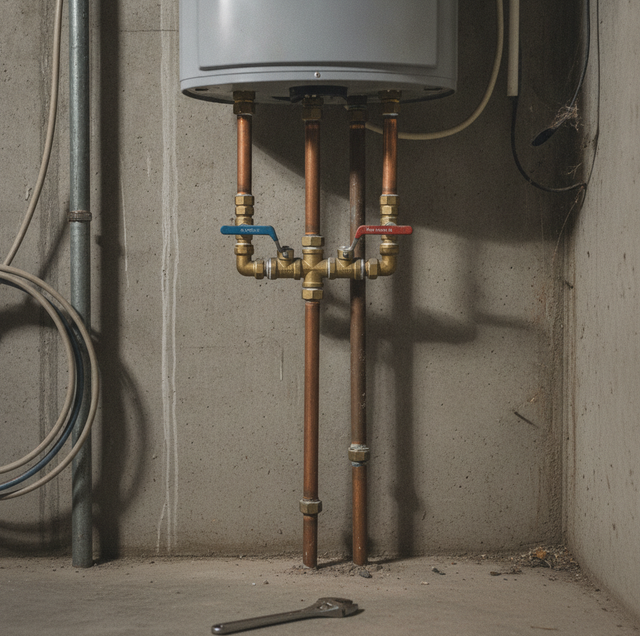
Two water heaters can deliver the exact same hot shower yet operate in completely different ways. One keeps a reservoir of water hot and waiting so it is ready the instant you turn the tap. The other keeps no reservoir at all and heats water only as it flows toward the fixture. That single difference, stored-and-ready versus heat-on-demand, drives almost every trade-off that follows: how much hot water you can pull at once, how much energy you spend when nobody is using it, how much wall or closet space the unit takes, and how many years it lasts before it needs replacing.
Before picking one, it helps to understand what each design is actually doing behind the panel. The recommendation at the end only makes sense once the mechanism is clear.
How A Storage Tank Heater Works
A storage tank heater is a large insulated cylinder, commonly holding 40 to 50 gallons or more. A burner or electric element heats that full volume, and a thermostat keeps it at a set temperature continuously. When you open a hot tap, water is already hot and leaves the top of the tank immediately, while cold water enters the bottom to be heated in turn.
The appeal is simplicity. The design is well understood, the unit is comparatively inexpensive to install, and it connects to existing gas or electric service without much fuss in most homes. The reservoir also means a large burst of hot water is available right away, since the whole tank is standing ready.
The reservoir is also a drawback. The tank reheats its stored water around the clock to maintain a constant temperature, whether or not anyone is home, which is energy spent on water that is only sitting there. And the capacity is finite. Draw enough hot water in a row, a long shower followed by a load of laundry, and you empty the tank faster than the burner can keep up. Once it runs out, you wait through a recovery period while the unit reheats a fresh volume.
How A Tankless Heater Works
A tankless heater, also called an on-demand heater, holds no reservoir. When a hot tap opens, a flow sensor detects the moving water, the burner or element fires almost instantly, and water is heated as it passes through a heat exchanger on its way to the fixture. Close the tap, and the unit shuts off. Nothing is kept hot in storage.
Because it heats continuously as water moves through it, a tankless unit does not run out the way a tank does. It can supply hot water for as long as the tap stays open, which is where the phrase endless hot water comes from. It also wastes far less energy while idle, since there is no stored volume to reheat, and the unit itself is small enough to hang on a wall, freeing the floor space a tank would occupy. Its serviceable parts and lack of a standing tank tend to give it a longer working life.
The catch is a ceiling on how much it can heat at one instant. A tankless unit can only raise the temperature of so many gallons per minute. Ask it to feed two showers and a kitchen sink simultaneously, and you may exceed its rated flow, at which point the water arriving at each fixture is cooler than you want. That ceiling is why sizing matters so much, and it is the single most misunderstood part of going tankless.
Sizing By Flow Rate And Temperature Rise
Tankless capacity is rated in gallons per minute, or GPM. But GPM alone is only half the picture, because heating water takes more work the colder it starts. The gap between your incoming water temperature and your target output temperature is called the temperature rise, and a tankless unit delivers fewer gallons per minute at a large rise than at a small one.
Sizing starts with two questions: how many fixtures might run at the same time during a normal peak, and how cold is the incoming water? Add up the flow of the fixtures you expect to run together, a shower plus a bathroom sink, for example, and match that total to a unit that can hold your target temperature at your local rise. Undersize it, and hot water thins out whenever the house gets busy. A tank sidesteps this math by simply emptying its reservoir instead, which is why the two designs fail in opposite ways: a tank runs out, a tankless runs cool.
A Water Heater You Only Notice When It Fails
Picture the two designs as two ways of keeping water hot in a kitchen. A tank is a full kettle left on a low burner all day, hot the moment you want it, but burning fuel the whole time and only holding so much. A tankless is a burner you light the instant you fill the kettle and switch off when you are done, no fuel wasted between uses, but you can only heat as fast as the flame allows. Neither is simply better. They spend their effort in different places.
Side By Side Comparison
| Factor | Storage Tank | Tankless (On-Demand) |
|---|---|---|
| Capacity | Finite reservoir, 40 to 50+ gal, then recovery time | Endless within its GPM flow-rate limit |
| Footprint | Large floor-standing cylinder | Small, wall-mounted |
| Standby loss | Reheats stored water continuously | Minimal, heats only on demand |
| Service life | About 8 to 12 years | Often near 20 years |
| Maintenance | Periodic flush, anode checks | Periodic descaling flush, more critical in hard water |
Which One Fits Your Home
The right choice comes down to how your household actually uses hot water. A larger household that runs several fixtures at once puts a premium on either a generously sized tank or a carefully sized tankless unit for peak simultaneous demand. A smaller household with staggered use is a natural fit for tankless, where the standby savings and long life pay off without ever brushing the flow ceiling.
Space matters too. If a floor-standing cylinder crowds a small utility closet or garage, a wall-mounted tankless unit reclaims that footprint. Service life is worth weighing over the long run, since a unit that lasts closer to 20 years replaces one that lasts 8 to 12 years less often. And in a hard-water area, factor in the maintenance both designs need to hit their rated numbers, which the next section covers.
A tank rewards you with simpler, cheaper installation and a large, ready burst of hot water at the cost of standby energy and a finite reservoir. A tankless system rewards you with an endless supply, a small footprint, lower standby loss, and longer life at the cost of a higher install effort and a hard limit on simultaneous flow. Match those trade-offs to your household, and the answer usually picks itself.
Safety And Installation Notes
Both types involve work that belongs to a licensed plumber. A gas unit handles fuel supply and combustion venting, and an improper vent can allow exhaust gases to enter the home. Switching from a tank to a tankless is rarely a simple swap: a gas tankless typically needs a larger gas line and different venting than the tank it replaces, and an electric tankless can demand more electrical capacity than a home's existing panel provides. These are sizing and safety decisions, not weekend projects, and getting them right is what keeps the unit performing and the household safe.
Frequently Asked Questions
It has no reservoir to empty, so it heats water across a heat exchanger on the way to the fixture and keeps going as long as the tap runs. The catch is that "endless" still lives under a flow ceiling. A typical shower pulls about 2 to 2.5 gallons per minute, so a unit rated around 7 GPM covers roughly two showers at once, and only at a modest temperature rise. Push past that combined flow, and the water arriving at each fixture turns cooler.
Tankless capacity is rated in gallons per minute, but that rating always assumes a given temperature rise, the gap between incoming and target water. Say your incoming water is 60 degrees and you want 120 at the tap; that is a 60-degree rise, and a unit's GPM rating drops sharply as the required rise climbs. So you size to both the peak fixtures running together and to your local rise, since the same unit delivers fewer gallons per minute on cold incoming water than on warm.
A storage tank reheats its 40 to 50 gallons around the clock to hold temperature whether or not you use them. That constant reheating runs to roughly 10 to 20 percent of the tank's annual energy just to keep water hot while it sits, which is the loss the Uniform Energy Factor rating on the label reflects. A tankless system avoids it by heating only on demand, with no standing volume to keep warm.
A storage tank typically lasts about 8 to 12 years before the tank corrodes, while a tankless unit often runs closer to 20 years because its parts can be serviced and it has no standing tank to rust through.
Both scale up, but a tankless heat exchanger has narrow passages that mineral scale clogs more quickly, so it needs periodic descaling to maintain its rated flow, and a water softener extends the life of either type.
Often not directly. A gas tankless fire at a far higher BTU rate than the tank it replaces, so the existing gas line frequently has to be upsized, commonly from 1/2 inch to 3/4 inch, and it needs its own dedicated, larger-diameter vent rather than the tank's old flue. An electric model instead needs significant added panel capacity. Either way, the swap is sized and installed by a licensed plumber, not a like-for-like replacement.
Ask about sizing the right water heater for your home — get a system matched to your household's real demand, not guesswork. Flow Tech Plumbing serves Peoria and the Valley. ROC #347159. Call (623) 267-2703.
