
When Does a Home Need a Sump Pump? Five Signs to Watch
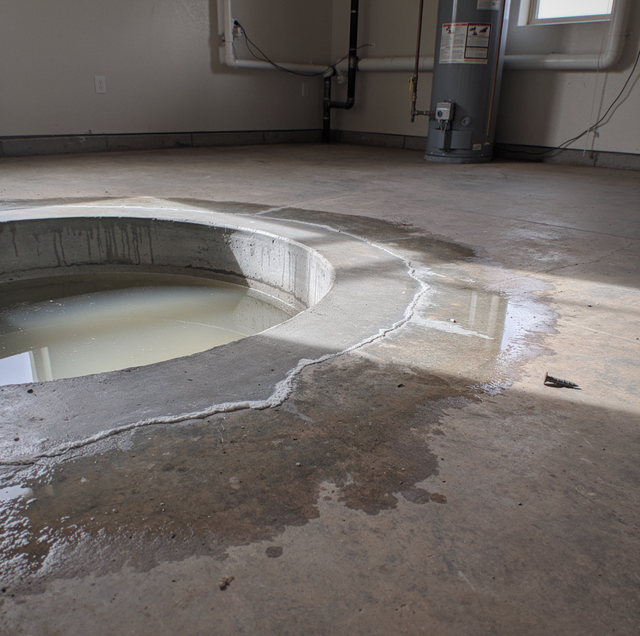
You smell it before you see it. A muggy, mineral smell rises out of the laundry closet the morning after a storm cell drops half an inch of rain in twenty minutes, and when you crouch down, the mechanical pit under your water heater is holding an inch of standing water. The concrete around the drain is dark, and your bare foot finds it cool before your eyes do.
That puddle raises one question: does your home need a sump pump, or did the storm just find your only low spot? The answer is not about how big your house is; it depends on where your slab sits, how the yard handles runoff, and whether your low point is one you should worry about.
The Slab Changes What a Sump Pump Protects
Most online sump pump guidance is written for basements, where a below-grade room collects water from a rising water table or a failed footing drain. Here, houses sit on a slab, so that same pressure shows up differently: warm spots on the floor, a foundation that stays damp longer than the rest of the yard, or moisture wicking up through a slab crack near a load-bearing wall.
Needing a pump has nothing to do with square footage. It comes down to whether a low point exists anywhere on the property: a below-grade laundry or mechanical pit, a sunken entry, a window well, or a corner of the yard water always reaches first. Without one of those low points, a pump has nowhere useful to sit.
A quick way to check which category your house falls into: stand at the lowest point on the property twenty minutes into a hard rain. Water moving away from the house means the grading is doing its job; water pooling and staying put means you already have the condition a pump addresses.
Five Signs the Property Is Already Sending Water Toward the House
Five conditions show up again and again in properties that end up installing a pump only after a problem starts, not before. None of them require a contractor to spot; they just require you to look in the right places after a hard rain.
| Sign | What It Usually Means |
|---|---|
| Water pools within ten feet of the foundation after a storm | The lot grades toward the house instead of away from it |
| A below-grade laundry or mechanical pit holds water a day after rain | The pit sits lower than the water moving through the yard |
| A block wall or slab edge shows a damp line near the ground | Groundwater is pressing against the foundation from outside |
| A yard's low corner stays soft for days after the rest has dried | Drainage has nowhere lower to go except toward the house |
| A below-grade room or crawl space smells like standing water | Moisture is already collecting somewhere a pump could intercept |
If two or more of these already describe your property, you are not looking at a maybe. Every sign above is something a pump can intercept once it has a place to sit, and something a technician can confirm on-site with a level and a five-minute look at your drainage.
Older homes in an established neighborhood are more likely to show one or two of these signs than new construction, simply because decades of settling and past landscaping changes have had more time to move water around.
A Single Cloudburst Tests a Lot's Drainage All at Once
A summer cell can drop more rain on a lot in twenty minutes than a slow winter storm drops in a week, and drainage that handles a light rain without trouble can fail completely once that much water arrives at once. Storm drains and yard grading are sized for an average year, not for a single afternoon that delivers a season's worth of runoff in one pass.
That is when a low point on the property gets tested for real. A below-grade pit that has sat dry for eleven months can take on several inches of water in under an hour, and a yard that drains fine after a sprinkler cycle can pond for a full day after a real storm front moves through.
Not every storm behaves the same way, either. A slow-moving cell parked over one neighborhood can drop three or four times the rain a fast-moving one drops a mile away, so two houses on the same street can have very different flooding histories even in the same season.
A Below-Grade Pit or Laundry Room Changes the Math
A below-grade pit is any point on the property built lower than the grade around it: a laundry alcove dropped a step down from the kitchen, a mechanical closet dug into the yard beside the water heater, a sunken entry, or a window well over a bedroom. None of these were built with drainage in mind; they exist because a builder needed the floor level to work with an appliance or a doorway, and the excavation left a shallow bowl behind. Water finds a bowl before it finds anything else on the lot, so a below-grade pit collects the first inch of any storm no matter how well the rest of the yard is graded. A home with one of these low points already has the condition a sump pump exists to solve; a home without one does not.
On a dry day, look for efflorescence: the chalky white salt crust left on a foundation wall or slab edge after water evaporates out of the masonry.
A below-grade pit without a pump is not a defect; plenty sit dry for years between storms. What actually matters is whether that pit has ever taken on water past an inch or two, because a pit with a track record like that during storm season needs a pump the next time skies open up.
A remodel can create a low point where none existed when the house was built. Extending a patio, adding a paver walkway, or regrading a side yard to direct drainage away from a neighbor's fence can just as easily send water back toward your own foundation. If you have added hardscape or changed grading in the last few years, walk the new layout after the next real storm before assuming the original design still protects you as it once did.
What Fades Once the Storms End?
By October, the puddle is gone, the pit looks dry, and the whole question can feel as if it has solved itself. What fades is the visible evidence, not the condition that caused it: the same low corner, the same below-grade pit, and the same grading are still there, waiting for the next storm cell to prove the point again.
Treat a dry pit in the off-season as a paused problem, not a solved one. If a spot collected water once during a real storm, it will collect water again the next time a storm of similar size comes through, whether that is next wet season or three years from now.
A Wet Pit Is an Electrical Hazard, Not Just a Wet One
A pump sits inside a pit built to hold water, wired through a cord and a float switch, both of which sit close to the same water line. A float can jam, a splice can corrode, or a cord can fray where it rubs the side of the pit, and any one of those turns the water in that pit into a path back to the outlet it is plugged into.
Never reach into a sump pit or touch the pump's power connection while water is standing or the unit is plugged in; call a licensed plumber or electrician to service a wet or energized pump.
A licensed technician checks the float, the cord, and the outlet's ground-fault protection as part of any pump service call and replaces anything that has degraded before the system goes back into service.
The Pump's Data Plate Lists a Number You Can Check Yourself
Every submersible sump pump ships with a metal or polymer data plate riveted to the housing, and that plate lists a rated capacity in gallons per hour at a stated vertical lift. That number is not a marketing figure; the motor is tested to hit it, and it is printed on every unit sold, not buried in a manual you have to track down.
If your property already shows two or more of the signs above- standing water within ten feet of the foundation, a below-grade pit with a history of taking on water, or a damp line at the base of a wall- the decision is not really open anymore. If none of those describe your yard, a pump is solving a problem your property does not have.
The next time you are near an installed pump, look at that data plate yourself. A common residential unit is rated in thousands of gallons per hour, a number stamped right there on the housing that you can compare with how much water your own pit has actually held.
None of this requires guesswork on your part. A level, a flashlight, and one good storm outside are usually enough to show you which side of that line your own property sits on before you spend money either way.
Frequently Asked Questions
No. Most homes here sit on a slab with good grading, so water never collects near your foundation the way you might assume. A sump pump earns its place where your yard has a low point: a below-grade pit, a mechanical room, or a corner that channels runoff toward your house instead of away from it.
Not by itself. A sump pump moves only water that has already reached the pit, so it works alongside grading and gutters, not in place of either. If your downspouts still dump water against the foundation and your yard still slopes toward the house, a pump gives you a second line of defense, but you still need the first one fixed.
Yes, though not for the reason a basement home would. Your slab sits on grade, so a high water table shows up as moisture rising from beneath, not pooling at a lower level. Where that pressure collects at a below-grade pit or a sunken laundry room off your kitchen, a pump gives that water somewhere to go besides your floor, and you can check that spot yourself.
A French drain usually moves water sideways, along a buried gravel trench, before it ever reaches your house. A sump pump moves water up and out, after it has already collected at the lowest point on your property. Most yards that flood need both: a drain that intercepts runoff crossing your lot and a pump that quickly handles whatever still finds its way into your pit, a below-grade room, or a low corner the drain missed.
It depends on how fast water reaches your pit, not on the size of your house. A typical residential pump rated around a third of a horsepower can move several thousand gallons an hour, which is enough for most below-grade pits and mechanical rooms in most homes. A larger low point, a long discharge run, or a history of stormwater reaching your pit fast may need a stronger motor, a judgment your technician makes on-site, not off a chart.
A simple install into your existing pit runs three to five hours of technician time: setting the pump, fitting the check valve, running the discharge line past your foundation, and testing the float switch through a few cycles. Add a day if a pit has to be dug and lined first, since the concrete needs time to cure around it before the pump can sit level and draw properly. Your technician tests the whole system with a hose before calling it finished, running enough water through your pit to watch a full cycle in front of you: the float rises, the pump kicks on, the water clears, and the switch drops back off on its own.
Get a sump pump evaluated before the next monsoon storm reaches your property — a licensed technician checks your yard grading, your below-grade pit, and your pump's rated capacity, then tells you plainly whether your home actually needs one installed at all. Flow Tech Plumbing serves Peoria and the Valley. ROC #347159. Call (623) 267-2703.
