
What Causes Water Hammer and 5 Reasons Your Pipes Bang
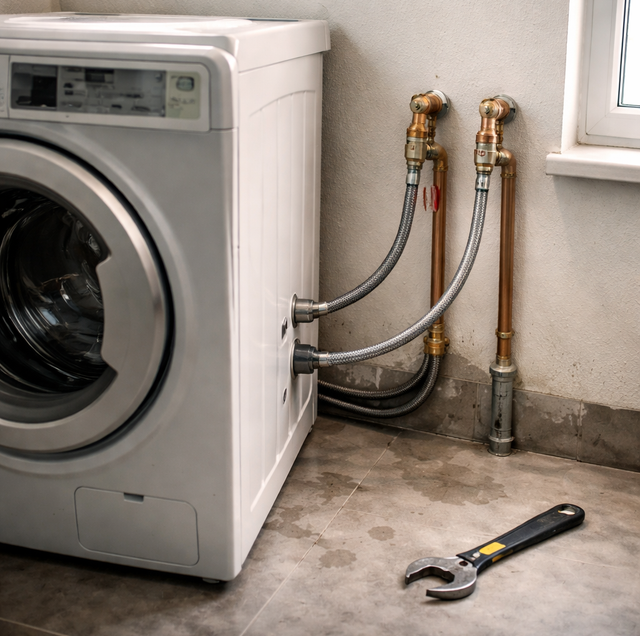
Quick Answer: Water hammer is the bang you hear when fast-moving water is stopped suddenly, usually by a valve slamming shut. The moving water has momentum, and when it hits a closed valve, it sends a pressure shockwave back through the pipe that jolts the metal against framing. The two real fixes are installing a water-hammer arrestor with a sealed cushion, or recharging the old air chambers by draining the system. If pressure is high, a pressure-reducing valve stops the noise at its source.
That sharp bang in the wall right after the washing machine stops filling is not the house settling. It is water hammer, and it is one of the few plumbing noises that tells you exactly what is wrong the instant you hear it. The sound is dramatic, but the cause is simple physics, and the repair is usually a single part in a single spot.
Why Moving Water Bangs When It Stops
Water inside your supply lines is not sitting still. When a fixture is open, water is flowing through those pipes at several feet per second, and moving water carries momentum the same way a rolling shopping cart does. As long as the water keeps moving, nothing rattles.
The trouble starts the moment that flow is cut off fast. A valve snaps shut in a fraction of a second, and all that moving water has nowhere to go. It slams into the closed valve, and the momentum converts into a pressure spike, a shockwave that races back up the pipe at hundreds of feet per second. That spike is what you hear and feel: the pipe lurches, knocks against a stud or a strap, and produces the bang.
A runaway train stopped by a solid wall does not simply halt; the cars behind pile their force into the point of impact. Water does the same thing inside a rigid pipe. The faster the flow and the quicker the stop, the harder the hit. This is why the noise shows up with certain appliances and rarely when you close a faucet slowly by hand.
Understanding the shockwave matters before you touch any fix, because every real repair works by giving that momentum somewhere soft to land instead of a hard pipe wall.
The Common Triggers Behind the Bang
Water hammer needs two ingredients: water moving with some speed, and something that stops it abruptly. A handful of everyday culprits supply both.
Quick-Closing Appliance Valves: The most frequent source is the solenoid valve inside a washing machine or dishwasher. These electric valves are built to snap fully closed in well under a second so the appliance can meter water precisely. That speed is exactly what creates the shockwave. If your bang lines up with the washer switching between fill cycles, the solenoid is almost certainly the trigger.
Single-Lever Faucets and Fast Shutoffs: Single-handle kitchen and bathroom faucets close their internal cartridge quickly, and a quarter-turn ball valve can go from open to shut in one flick. Any fixture that stops flow in an instant can set off the knock, though appliances hit hardest because they cut a full-volume stream.
Worn or Missing Air Chambers: Many homes were plumbed with air chambers, short capped stubs of vertical pipe near fixtures that trap a pocket of air to absorb the shock. Over years, the air slowly dissolves into the water, and the chamber fills solid, leaving nothing to cushion the hit. A house that was quiet for a decade and suddenly bangs often has waterlogged chambers.
High Water Pressure: The higher your static pressure, the more force is already loaded into the line, so every sudden stop lands harder. Pressure above roughly 80 psi turns a mild tick into a wall-shaking thud and stresses every joint in the system.
Loose Pipe Straps: Loose framing straps do not cause the shockwave, but they let the pipe move when the shockwave hits. A well-secured pipe absorbs the jolt quietly. A pipe with a missing or loose strap swings and cracks against the wood, which turns a small internal spike into a loud, repeating knock.
The Two Repairs That Actually Silence It
Only two fixes address the shockwave itself. Everything else reduces how often it happens or how loud it lands.
Install a Water-Hammer Arrestor: A water-hammer arrestor is a small sealed device that screws onto the supply line, ideally right at the appliance that causes the bang. Inside is a spring-loaded piston or a permanently sealed air charge behind a seal. When the pressure spike arrives, that cushion compresses and absorbs the momentum, then resets itself. Because the air is sealed off from the water, it never waterlogs the way an open air chamber does, so an arrestor keeps working for years. At a washing-machine box, the arrestor threads onto the hot and cold bibs; deeper in the wall it is soldered or clamped into the line, which is plumber territory.
Recharge the Old Air Chambers: If your home has traditional air chambers that have filled with water, you can restore their air pocket without buying anything. Shut off the main water supply, then open the highest and lowest faucets in the house, indoor and outdoor, and let every line drain completely. As the water empties, air refills the chambers. Close the faucets, turn the main back on, and the restored air pocket cushions the shock again. It is a reasonable homeowner job, though it can need repeating every year or two as the air redissolves.
Fix High Pressure and Loose Pipes at the Source
Even with an arrestor in place, high pressure keeps stressing the whole system. If a gauge on an outdoor spigot reads above about 80 psi, the fix is a pressure-reducing valve, a PRV installed on the main line just past the meter. It steps incoming pressure down to a safe range, usually 50 to 60 psi, which softens every shutoff in the house at once and protects fixtures, the water heater, and the washing-machine hoses along the way.
Loose pipes get handled separately. Adding or tightening cushioned straps every few feet along the run keeps the pipe from swinging when a spike does slip through. Straps with a rubber or foam sleeve are quieter than bare metal clamps because they stop the pipe from ringing against the hanger.
Why Ignoring the Bang Costs You Later
A single knock will not burst anything. The damage is cumulative. Each shockwave puts a hard mechanical stress on every threaded joint, soldered fitting, and valve connection in its path. Repeated thousands of times, that stress works fittings loose, wears out valve seats, and eventually opens a slow leak at a joint that was fine when the banging started.
The higher your pressure, the faster this plays out, because a high-pressure spike hits harder and a joint already under strain has less margin. A leak inside a wall or above a ceiling can run undetected for weeks. Silencing the hammer early is far cheaper than opening drywall to chase the drip it caused.
Water Hammer Versus Other Pipe Noises
Not every pipe sound is water hammer, and matching the noise to its cause saves you from replacing the wrong part.
True water hammer is a single sharp bang or a short rapid series of knocks that happens right when flow stops, most often as an appliance finishes filling. If the sound is a soft, steady tick or trickle that continues while water is running, that is normal flow noise or a fixture passing water, not a shockwave.
A slow, rhythmic ticking that starts a minute or two after you run hot water and fades as things cool is thermal expansion: copper or CPVC pipe sliding a hair against framing as it warms and lengthens. It follows temperature, not the valve, and it never produces a true bang. Water hammer is tied to the instant a valve closes; thermal ticking is tied to heat. Get that distinction right, and you will know whether you are chasing an arrestor and pressure, or simply a pipe that needs a cushioned clip where it crosses a joist.
Frequently Asked Questions
The screw-on type that threads onto the washing-machine hot and cold hose bibs is a reasonable DIY swap: shut the two supply valves, unthread the hoses, thread the arrestor onto each bib, then reconnect the hoses. An arrestor that has to be soldered or clamped into a pipe inside the wall is a plumber's job, since it means opening the line and, for copper, sweating a joint.
Yes. Arrestors are rated by a letter class (A through F) tied to the number of fixture units they protect. A single washing machine needs only a small class-A unit, while a long branch feeding several fixtures needs a larger class rated for that combined demand. An undersized arrestor on a big line will not fully absorb the spike, so match the class to the run rather than grabbing the smallest one on the shelf.
The usual reason is that the home's original air chambers have finally waterlogged. The trapped air slowly dissolves into the water, so a chamber can cushion shocks for eight or ten years and then go solid, at which point the bang appears seemingly overnight. A creeping rise in municipal supply pressure can produce the same sudden onset.
No, and confusing the two wastes money. An expansion tank absorbs the gradual pressure rise that comes from heating water in a closed system, protecting the water heater and relief valve. It does nothing for the fast valve-closing shockwave that causes hammer. Those need an arrestor or recharged air chambers, which are different devices for a different problem.
Buy an inexpensive pressure gauge with a female hose thread, screw it onto an outdoor spigot or the washing-machine cold bib, and open that valve fully with no other water running. A static reading above 80 psi is over the limit most fixture manufacturers allow and points to a pressure-reducing valve. Check it at a time when no one is using water, since flow lowers the reading.
Yes. The same shockwave that rattles the pipe also slams the inlet valves and connections on the water heater, dishwasher, and washing machine. Over time, it can crack a supply hose, loosen a heater connection, or wear out an appliance fill valve early. Silencing the hammer protects those appliances as much as it protects the pipes in the wall.
Stop the banging before it loosens a joint — a quick arrestor or PRV install ends water hammer for good. Flow-Tech Plumbing serves Peoria, Surprise, and Glendale. ROC #347159. Call (623) 267-2703.
