
Gas vs Electric Water Heater: Which Should You Choose?
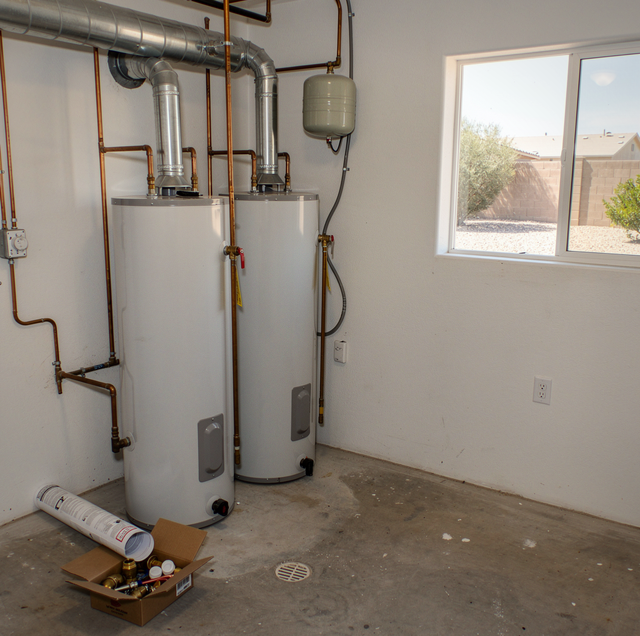
Two water heaters can sit side by side in a mechanical closet, look nearly identical, and still solve the hot-water problem in completely different ways. One burns fuel under a tank and vents the byproducts outside. The other runs current through a heating element and needs no vent at all. Picking between them comes down to what your home already has, what it would take to add what it doesn't, and which tradeoffs you can live with for the next decade or more.
This comparison covers how each type heats water, what installing one requires, how long each lasts, what happens when the power goes out, and where efficiency and environmental impact diverge.
How Each Type Actually Heats Water
A gas water heater burns natural gas or propane at a burner beneath the tank, and the combustion gases pass up through a flue before venting outside. That direct flame is a high-BTU heat source, which is why gas units tend to reheat faster than an electric one of the same size.
An electric water heater instead uses one or two resistance elements submerged directly in the water, similar to the coil in an electric kettle. Current passes through the element, heating it, and the water absorbs that heat directly. There is no flame and no exhaust, so electric tanks and tankless units alike need no venting.
Both designs come in tank and tankless configurations, so the fuel choice and the tank-vs-tankless choice are separate decisions that happen to intersect. This comparison focuses on the fuel-source question.
Operating Cost And Value Over Time
Neither fuel wins outright on running cost. Natural gas is generally the cheaper energy source per unit of heat where gas service already reaches the home, which is part of why gas tanks remain the default replacement in homes already piped for it. Electric resistance heating converts essentially all the energy it draws into heat at the element, with none lost to a flue, but electricity is typically the more expensive energy per unit of heat in most markets.
Total cost of ownership matters more than the running bill alone. A gas unit costs more to install because of the venting and gas line work, while an electric tank is a simpler install. Maintenance leans the other way: a gas burner, thermocouple or igniter, and venting add parts that eventually need attention, while an electric element and thermostat are fewer parts to service.
Recovery Speed: How Fast Each Type Reheats
Recovery rate, how many gallons a heater can reheat per hour after a big draw, is one of the more concrete differences between the fuels. A typical gas storage tank recovers 40 to 55 gallons per hour, driven by a burner input of around 30,000 to 40,000 BTU. A comparable electric tank with a single 4,500-watt element usually recovers about 20 to 25 gallons per hour, roughly half the gas unit's pace, since a typical home circuit limits how much wattage an element can safely draw.
That gap shows up most right after heavy simultaneous use: back-to-back showers followed by a load of laundry, for example. A gas tank claws its way back to full temperature noticeably faster, while an electric tank of the same nominal size takes longer to catch up. Households with tight, overlapping hot-water demand tend to notice this gap more than households that spread their use across the day.
Installation Requirements: Venting And Gas Lines Vs Electrical Circuits
A gas water heater needs a gas line sized to its BTU input, a combustion-air path so the burner has enough air to burn cleanly, and a venting path: either a conventional flue tied into an existing chimney, or a dedicated power vent for a sealed-combustion unit. Retrofitting gas into a home that never had it, or upsizing an undersized line, is real construction work: new pipe and often modified venting through a wall or roof.
An electric water heater trades that for an electrical question instead. A standard electric tank needs a dedicated 240-volt circuit sized to its element wattage, commonly a 30-amp double-pole breaker. An electric tankless unit is a bigger ask: it heats a full stream of water instantly rather than a stored volume, so it often needs 60 to 150 amps split across multiple breakers, which can mean a panel upgrade in a home whose service was never sized for that draw.
Neither path is cheaper across every home. A house already piped for gas with an existing vent favors staying on gas; a home with no gas service and a roomy panel favors electric instead. The deciding factor is almost always existing infrastructure, not which fuel is better.
Expected Lifespan
A gas storage tank commonly lasts about 8 to 12 years before internal corrosion or a failed component ends its useful life. An electric storage tank often runs a bit longer, commonly 10 to 15 years, since it has no burner assembly or flue exposed to combustion byproducts and heat cycling. Tankless units of either fuel source tend to outlast tank units by a wide margin, commonly 15 to 20 years, since serviceable parts can be replaced individually rather than the whole unit failing when the tank corrodes through.
Anode-rod maintenance affects both tank types similarly: the rod sacrifices itself to protect the tank's steel lining, and replacing it every few years extends either fuel type's tank life. Hard water accelerates mineral buildup on tank walls and heating elements alike, shortening the life of both gas and electric equipment faster than in a home with softer water.
Performance During A Power Outage
This is where the two fuels diverge sharply, and it's worth understanding the mechanism rather than assuming gas always means no power needed. A conventional gas tank with a standing pilot light and a thermocouple-controlled valve requires no household electricity to heat water; the pilot stays lit, and the valve opens and closes mechanically. That older-style design keeps producing hot water through an outage.
Many newer gas water heaters use an electronic igniter instead of a standing pilot, and some use a power-vented design with a blower fan to move exhaust outside. Both features need household electricity to function, so a modern gas tank with electronic ignition will stop heating water during an outage, much like an electric unit. Gas tankless heaters go a step further: nearly all rely on electronic controls, ignition, and often a small blower, so a gas tankless unit is effectively as power-dependent as an electric one unless paired with a battery backup.
An electric water heater, tank or tankless, has no path around this: no household power means no current through the element, so hot water stops the moment power does. If outage resilience matters to your household, the real question about a specific gas unit isn't "gas or electric" but "standing pilot or electronic ignition," since that detail decides whether it needs power to run at all.
Environmental And Efficiency Considerations
Electric resistance water heaters convert essentially all of the electricity they draw into heat at the point of use, since no flue carries heat outside. Gas water heaters lose some fuel energy up the flue with the exhaust; a standard atmospheric-vent gas tank typically converts around 80 percent of fuel energy into hot water, while a condensing gas model recovers more of that heat and closes much of the gap.
Upstream of the unit, electricity's footprint depends on how the local grid generates power, so an electric water heater is cleaner where the grid leans toward lower-emission generation, while gas combustion produces a fairly consistent emissions profile regardless of the grid. Neither fuel is a clear winner everywhere, which is why efficiency is usually best measured in dollars and BTUs rather than absolute environmental terms.
Side-By-Side Comparison
| Factor | Gas Water Heater | Electric Water Heater |
|---|---|---|
| Recovery speed | Faster; 40-55 gal/hr typical (tank) | Slower; 20-25 gal/hr typical (tank) |
| Installation needs | Gas line sized to BTU input, combustion air, venting/flue | Dedicated 240V circuit; tankless often needs a panel upgrade |
| Lifespan (tank) | About 8-12 years | About 10-15 years |
| Lifespan (tankless) | Commonly 15-20 years | Commonly 15-20 years |
| Power-outage performance | Standing-pilot models keep running; electronic ignition or power vent models still need electricity | Stops entirely; no power means no heating element |
| Efficiency at the unit | Roughly 80% (standard), higher for condensing models; flue loss is unavoidable to some degree | Near 100% at point of use; upstream emissions depend on the grid |
Which One Fits Your Home
Start with what your home already has. A house piped for gas with an existing vent favors staying on gas, especially if faster recovery matters to a busy household. A house with no gas service or a line needing significant upsizing often comes out ahead by going electric, provided the panel has room for the added circuit.
If outage resilience is a priority, look past the fuel label and ask how the unit ignites: a standing-pilot gas tank keeps working without power, while an electronically ignited gas unit and any electric unit both go dark until service returns. If recovery speed under heavy use matters more, gas has the edge at a given tank size. If a simpler, no-venting install and slightly longer tank life matter more, electric usually wins. The right answer matches the constraints your specific home already has, not a blanket rule.
Frequently Asked Questions
Yes, but it's a real installation project either direction, not a like-for-like swap. Electric to gas means running or extending a gas line, commonly upsizing to 3/4-inch pipe, and adding a vent path where none existed. Gas to electric means removing the old flue connection and adding a dedicated circuit, which on an older panel with limited breaker slots can require a subpanel first.
Not automatically. Recovery depends on both the burner or element wattage and the tank design, so a low-BTU gas unit can be outpaced by a well-designed, higher-wattage electric tank on a properly sized circuit. As a rule of thumb, a same-capacity gas and electric tank, compared head-to-head, favors gas by close to double the recovery rate, since typical household circuits cap how much wattage an element can safely draw.
Beyond the vent connection, a gas unit needs open combustion-air pathways, typically louvers or vents sized to the space and the burner's BTU input, so it has enough fresh air to burn cleanly rather than drawing on limited room air. Closets and small utility rooms often need dedicated louvered doors for this reason, one more reason a straight fuel-type swap in a tight closet isn't always simple.
Some gas tankless manufacturers offer a battery-backup accessory or a small UPS-style unit to keep the ignition and control board running through a short outage, since the tankless unit's electronics would otherwise go dark along with an electric heater's. It won't run the unit indefinitely, but it can bridge a brief outage that would otherwise cut off hot water entirely.
A heat-pump water heater is technically electric, since it runs on household current, but it works differently from either unit in this comparison: instead of generating heat directly, it pulls ambient heat out of the surrounding air and moves it into the tank, similar to how a refrigerator moves heat in the opposite direction. That makes it more efficient than resistance heating, but it also cools and dehumidifies the space it draws air from, and it recovers more slowly than a gas or standard electric tank.
Scale buildup affects both, but it shows up differently. In a gas tank, sediment settling near the base can insulate that area, forcing the burner to work harder to reach the same temperature. On an electric tank, scale coats the submerged heating element directly, which can shorten element life and eventually cause it to fail outright. Either way, a periodic flush and anode rod check slow the buildup regardless of which fuel the tank runs on.
Ask about switching between a gas and electric water heater — get a straight answer on what your home's gas line, venting, or electrical panel can support. Flow Tech Plumbing serves Peoria and the Valley. ROC #347159. Call (623) 267-2703.
